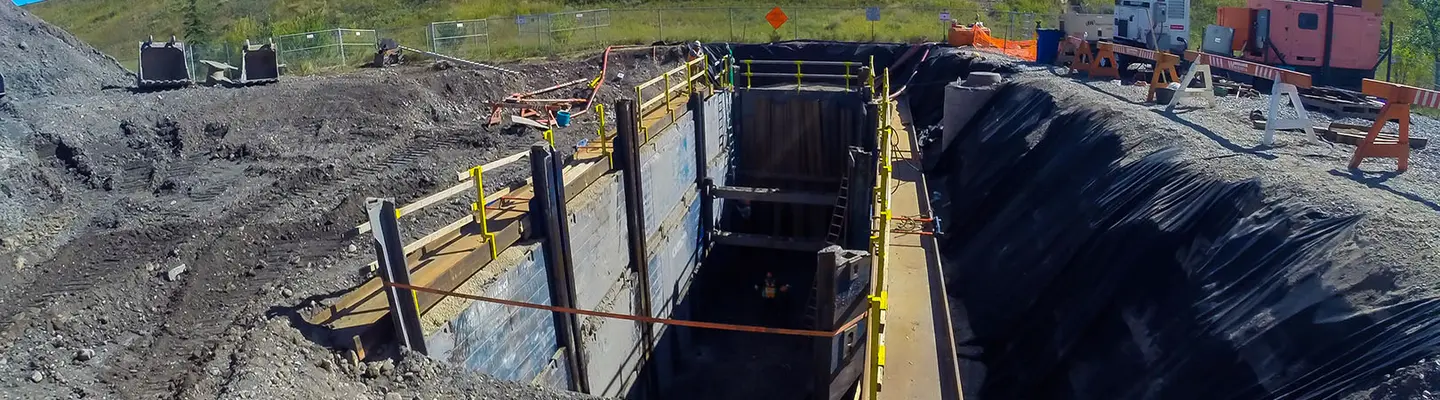
Trench shoring and shielding have different functions and applications. Knowing when to use which is key.
Article Updated on: October 16, 2026
Choosing the right protective system is critical to keeping workers safe in trenches and other excavations. Trench shoring and trench shielding are two types of OSHA-approved systems. While “trench shoring” and “trench shielding” are often used interchangeably, even by industry professionals, they aren’t the same. Understanding shoring vs. shielding can help contractors use these methods appropriately.
What is trench shoring?
Trench shoring supports the walls of an excavation through positive pressure to help prevent a cave-in. It uses components such as vertical posts, horizontal walers, lateral braces and sheeting to apply pressure to the walls to keep them in place. Shoring also provides support for nearby structures and utilities.
Types of shoring systems include hydraulic shoring, the safest and most modern method, and welded beam and plate shoring, an older method. Hydraulic shoring eliminates the need for dangerous hot work including cutting and welding. It uses hydraulic braces and sometimes hydraulic struts to support the trench walls. Modular hydraulic shoring and bracing systems are often ideal for deep, long or irregularly shaped excavations.
What is trench shielding?
A trench shield, also called a trench box, provides a safe space for workers to occupy inside the excavation. It's designed to protect them from falling soil, rocks and other debris if the walls collapse. The boxes are made from steel or aluminum and are set as close to the walls as possible, within the limits of the manufacturer's tabulated data. Spreader bars, usually steel, keep the box rigid even under heavy soil loads.
Shields are customizable, with common heights from 4 to 10 feet and common lengths from 6 to 40 feet. Boxes can be stacked to protect workers in deeper trenches.
Modular aluminum trench boxes such as the Modular Aluminum Panel System (MAPS) are also available. These highly versatile solutions use components that can easily be pinned together to create two-sided, three-sided or four-sided trench boxes built to specification.
What is aluminum hydraulic shoring?
Aluminum hydraulic shoring combines shoring power with shielding protection, offering both collapse prevention and safe refuge for workers. A telescoping hydraulic cylinder replaces the static spreaders typically used in trench shields. This cylinder applies positive pressure to the trench walls. Combining shielding and shoring in this way is often convenient when access is tight or utility crossings exist.
What are common applications for trench shoring?
Trench shoring is typically used to support deeper and more complex excavations and excavations where no ground loss or soil movement is acceptable. It’s popular on long-duration projects because the longer an excavation is open, the greater the chances of soil movement.
Lightweight vertical hydraulic shores are sometimes used in smaller trenching applications, such as to support narrow linear trench runs.
Common shoring applications include:
- Pipe installations with an active roadway, railroad, railyard or structure close to the edge of the excavation
- Underground work in highly congested areas with existing utilities
- Excavations that abut an existing foundation and/or footer
What are common applications for trench shielding?
Trench shielding can be an appropriate choice for relatively shallow or moderately deep excavations when there’s no need to completely prevent the movement of surrounding soil. Because trench boxes take little time to install, they are often used on shorter-duration projects.
Contractors often use shielding when:
- Installing foundations in relatively stable soil
- Installing or repairing pipelines and utility lines when working in remote areas away from critical structures
- Repairing or replacing fire hydrants
How do I choose between trench shoring and shielding?
Choosing between shoring vs. a trench box can sometimes be challenging. The designated competent person for excavation work is responsible for choosing an appropriate protective system based on factors including the soil conditions, the length, width and depth of the excavation, and proximity to surface loads and encumbrances. That person should consult the manufacturer’s tabulated data for the shoring or shielding equipment to understand the limitations of its use.
When shielding an excavation, other considerations include access to heavy equipment to transport heavy steel shields and the amount of overhead room available for maneuvering. Placing a shield requires moving and setting up an entire assembled system. Shoring typically is installed sequentially, often with a number of smaller components.
Learning when and how to properly use shoring and shielding appropriately can save lives.
“Knowing the capacities and limitations of the equipment you’re working with is key to using it safely and compliantly,” said Chad Lindsley, national account manager, United Rentals. “I’m also a firm believer that using shielding and shoring systems in a proper manner not only increases your ability to be safer but also should increase your productivity.”
The Trench Safety team at United Rentals can help contractors choose the best trench protective systems for their applications. They can also design a custom trench engineered sytem for deep or complex excavations.
 Facebook
 X
 Linkedin
 Email
 Print
 Copy Link
 RSS Feed