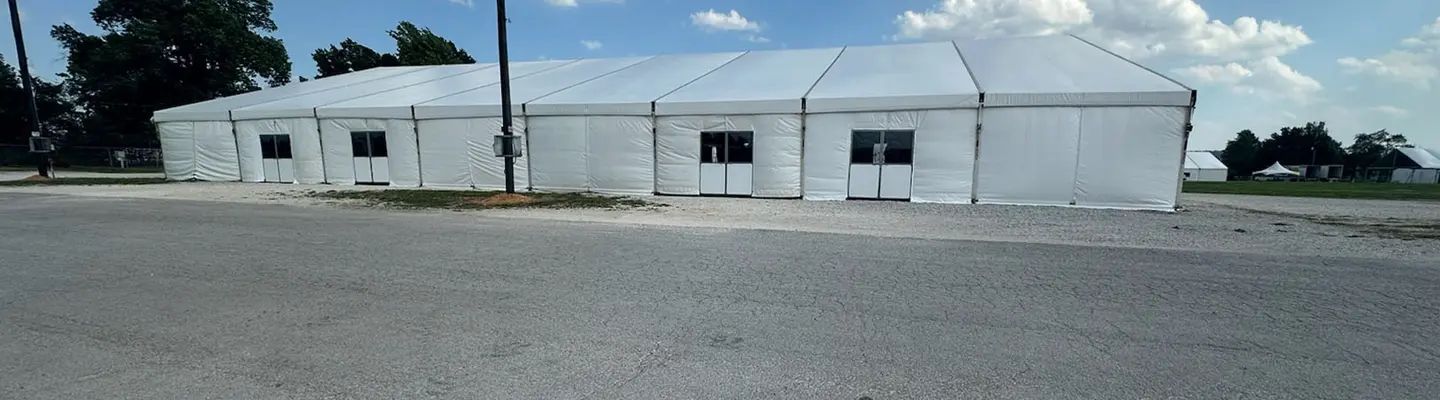
Learn how industrial fabric structures can help organizations reduce material use, improve operational flexibility and support sustainability initiatives across jobsites and facilities.
Organizations across construction, manufacturing and industrial operations are looking for ways to reduce environmental impact while maintaining productivity and operational flexibility.
Industrial fabric structures can help support these efforts by creating temporary or semi-permanent space with fewer materials, faster deployment timelines and reusable components.
From equipment storage and workforce support areas to temporary warehouses and operational facilities, fabric structures provide adaptable space solutions that align with evolving sustainability and efficiency goals.
Understanding fabric structures and their materials
Industrial fabric structures typically combine aluminum or steel framing with durable PVC-coated fabric or insulated wall systems.
These materials are designed to support temporary and semi-permanent applications across changing jobsite and environmental conditions. Depending on the structure type, fabric buildings may include weather-resistant, UV-resistant or insulated components that help protect workers, equipment and materials.
Industrial fabric buildings are commonly used for:
- Equipment and material storage
- Temporary warehouses
- Employee breakrooms
- Workforce support areas
- Manufacturing overflow space
- Agricultural storage and shelters
- Event and operational facilities
How industrial tents benefit the environment
Industrial fabric structures can help organizations reduce material use, improve energy efficiency and minimize waste compared with some traditional construction approaches.
Because these structures are modular and reusable, they may also help support long-term operational flexibility across multiple projects or facilities.
1. Fabric storage structures require fewer resources
Industrial fabric structures often require fewer construction materials than permanent buildings because they use lightweight framing systems and modular fabric components.
In many applications, this can help reduce resource consumption, site disruption and overall construction complexity.
2. Industrial fabric buildings help reduce carbon emissions
The construction industry continues to evaluate ways to reduce emissions associated with material production, transportation and building operations.
Industrial fabric structures may help support these efforts through faster installation processes, reduced material requirements and energy-efficient design options.
Because these structures are modular and reusable, they can often be relocated and redeployed across multiple projects instead of requiring new permanent construction for every application.
3. Temporary structures extend building life cycles and minimize waste
One advantage of temporary fabric structures is their ability to be reused across multiple projects and locations.
Rather than demolishing permanent structures after short-term use, organizations can often dismantle, relocate and redeploy fabric buildings as operational needs evolve.
Depending on the structure and material type, some components may also be recyclable at the end of their service life.
4. Industrial tents increase energy savings
Industrial fabric structures can be equipped with insulated wall systems and climate-control equipment designed to help maintain interior temperatures more efficiently.
Depending on the application and environmental conditions, this may help reduce heating and cooling demands compared with less insulated temporary structures.
For example, advanced structures like our Pro+ series and TITAN series tents are engineered to retain heat efficiently. These tents are fully insulated to maintain a comfortable temperature inside, resulting in significant savings on HVAC expenses.
Advanced insulated structures may also help support workforce comfort, equipment protection and operational continuity during changing weather conditions.
Where fabric structures make a difference
Industrial fabric structures support a wide range of industries that require flexible temporary or semi-permanent space.
- Construction: Support temporary workforce space, equipment protection and material storage on active jobsites.
- Manufacturing: Provide additional operational space during facility expansions, maintenance shutdowns or production increases.
- Agriculture: Create adaptable storage and shelter space for agricultural operations and seasonal demand.
- Events: Support temporary event infrastructure, climate-controlled gathering spaces and workforce operations
Sustainability that supports operational growth
Many organizations are balancing sustainability goals with the need to remain flexible, efficient and cost-conscious.
Industrial fabric structures can help support this balance by providing adaptable space solutions without the timeline or material demands associated with permanent construction.
For construction and industrial teams managing changing project conditions, temporary structures may also help improve workforce support, operational continuity and site organization.
Industrial structures support environmental and operational goals
Industrial fabric structures provide organizations with flexible temporary space that can support operational efficiency and sustainability initiatives at the same time.
Whether used for workforce support, storage, temporary warehousing or operational expansion, these structures help teams adapt quickly while reducing the need for additional permanent construction.
United Rentals supports customers with scalable temporary structure solutions backed by national reach, local expertise and jobsite support.
 Facebook
 X
 Linkedin
 Email
 Print
 Copy Link
 RSS Feed